

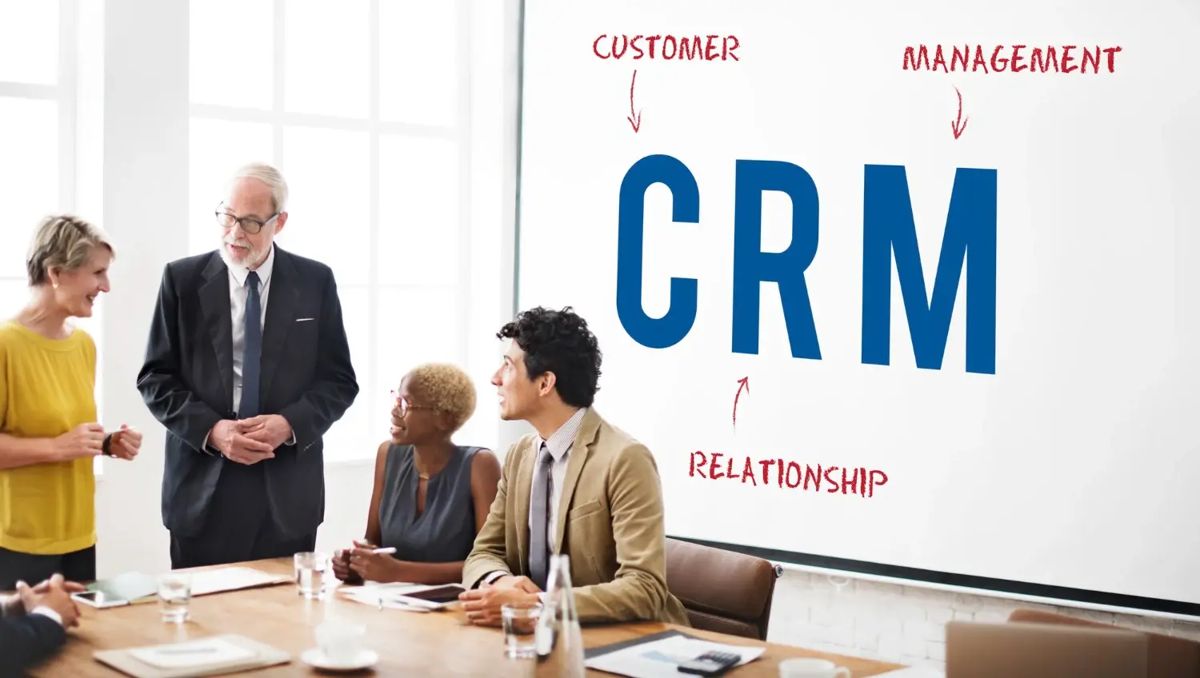
Customer Relationship Management (CRM) systems have become a cornerstone of modern business development. According to multiple studies, the global CRM market continues to grow rapidly. Beyond large enterprises, SMEs and startups are also investing heavily in these platforms to strengthen customer relationships and accelerate growth. Yet the promise is still too often unfulfilled. According to HubSpot, nearly 50% of CRM projects fail due to poor user adoption. Even when a CRM is implemented, only around 46% of organizations achieve an adoption rate above 90%.
Introduction
Why do so many organizations struggle with tools designed to simplify their commercial processes? Common pitfalls include investing in technology without a clear CRM adoption strategy or failing to align the system with a scalable Commercial Operating Model. When these elements are missing, CRM fails to serve as Commercial Memory.
Common CRM Implementation Pitfalls
The first step toward building a sustainable CRM is understanding why most CRM initiatives fail. Organizations typically fall into the following predictable traps.
Technology Before Strategy
Many companies rush to implement a new system without aligning it with their overall sales strategy. CRM is often treated as a silver bullet rather than as part of a structured business development plan. Without a clear commercial strategy behind it, the tool becomes just another database instead of a relationship engine.
Low User Adoption
Even the most advanced CRM is useless if teams do not use it consistently. Research shows that 32% of sales professionals struggle to fully adopt their company’s CRM due to complexity or lack of training. When sales teams see CRM as an administrative burden rather than a benefit, organizations never achieve the data consistency required for growth.
Fragmented Processes
A CRM cannot fix broken internal processes. When departments operate in silos or when critical steps in the customer journey are missing, the system only amplifies these gaps. Fragmentation leads to poor data quality, missed opportunities, and sales leaders who cannot rely on accurate forecasts.
Neglecting Scalability
Companies often select a CRM that fits immediate needs without considering long-term growth. This short-term thinking causes systems to become obsolete quickly, forcing costly and disruptive reimplementations later on.
Why a CRM Adoption Strategy Matters
At its core, CRM is not just about software, but about people and processes. Successful organizations treat CRM implementation as a change management journey rather than a technical rollout.
A strong CRM adoption strategy ensures the system becomes a natural part of daily sales activity. This requires leadership buy-in, clear communication of benefits, and continuous training that shows teams how CRM makes their work easier. It also requires workflows that match how sales teams actually engage with prospects and customers.
Organizations that prioritize CRM adoption see tangible results. Salesforce reports that companies effectively using CRM increase sales by an average of 29% and sales productivity by over 34%. That is the difference between a dormant system and one that drives sustainable growth.
HubSpot CRM Success as a Model
Not all CRM platforms are created equal. One reason De Grijff implements HubSpot is its ability to balance usability with scalability. HubSpot CRM is designed to be intuitive for users, lowering the adoption barrier, while still offering advanced features that support long-term growth.
HubSpot provides integrated tools for sales, marketing, and customer success, allowing organizations to centralize their commercial processes in one place. This prevents the fragmentation that undermines many CRM systems. More importantly, HubSpot makes data accessible and actionable, enabling sales leaders to track performance and refine strategy based on real insights.
Technology alone, however, does not guarantee success. True HubSpot CRM success happens when it is embedded in a structured business development process where every touchpoint is aligned and measurable, from prospecting through customer follow-up.
Building a Scalable CRM Integration
To create a sustainable CRM, organizations must think beyond initial implementation. The goal is not a one-time setup, but a scalable CRM integration that grows with the business.
Key principles include:
• Start with strategy by clearly defining commercial goals such as lead quality, conversion improvement, or customer retention
• Ensure cross-functional alignment so sales, marketing, and customer success operate from a shared system
• Prioritize usability with intuitive dashboards, clear workflows, and minimal manual input
• Focus on data quality through consistent input rules, validation, and regular cleanup
• Plan for scalability with flexible workflows, modular integrations, and expandable reporting
A CRM configured with these principles becomes a long-term growth asset rather than a short-lived tool.
De Grijff’s Approach to Sustainable CRM Success
At De Grijff, we believe commercial success comes from high-value relationships, not isolated actions. We do not just implement software; we integrate it into a living, scalable Commercial Operating Model.
Our process starts with commercial strategy. We help leadership sharpen KPIs and align CRM as Commercial Memory with measurable goals. We then use HubSpot to streamline processes and focus on Human Business Development, ensuring your system is a consistent engine for growth.
This combination of strategy, software, and commercial execution ensures CRM becomes an integrated part of the sales process, supporting growth today and scaling for tomorrow.
A Living CRM Makes the Difference
When organizations treat CRM as just another tool, they often fall into the same pitfalls that lead to failure. When they treat it as the backbone of their sales engine, it becomes a powerful driver of growth.
A sustainable CRM is not about flashy features or quick wins. It is about structure, alignment, and consistency. It is about giving sales teams a system they actually want to use because it makes their work easier and more impactful. It is about creating transparency so leaders can guide their teams with confidence.
That is how organizations move beyond failure statistics and turn CRM into a living, scalable engine for success.
CRM is one of the most important investments for Commercial Continuity, yet without the right approach, it often fails. The difference lies in a strategy that prioritizes a Continuous Improvement Loop to build a sales engine that keeps delivering.
Is your CRM driving real commercial outcomes? At De Grijff, we help organizations transform their technology into a scalable Commercial Operating Model through strategy, HubSpot expertise, and structured Market Development.
Get in touch today to explore how your organization can avoid common pitfalls and build a CRM that truly lasts.
References & further reading
- Our Insights — De Grijff
- The Commercial Operating Model — De Grijff