
B2B markets and industries: every market plays by its own rules.
Buying dynamics change by market. So do the stakeholders, timing, language and reasons a conversation matters. We learn that context before developing the market.

Different buying dynamics. Different reasons to engage.
Markets where context matters before outreach starts.
We work best in B2B environments where the product or service takes explanation, decisions involve multiple people and commercial momentum depends on more than a single campaign.
Manufacturing & Industrial Technology
Technical products, specialist applications and operational buying groups where relevance depends on understanding how the proposition fits the customer’s reality.
02Energy & Infrastructure
Project-driven markets shaped by investment cycles, regulation, technical evaluation and multiple stakeholders across commercial and operational teams.
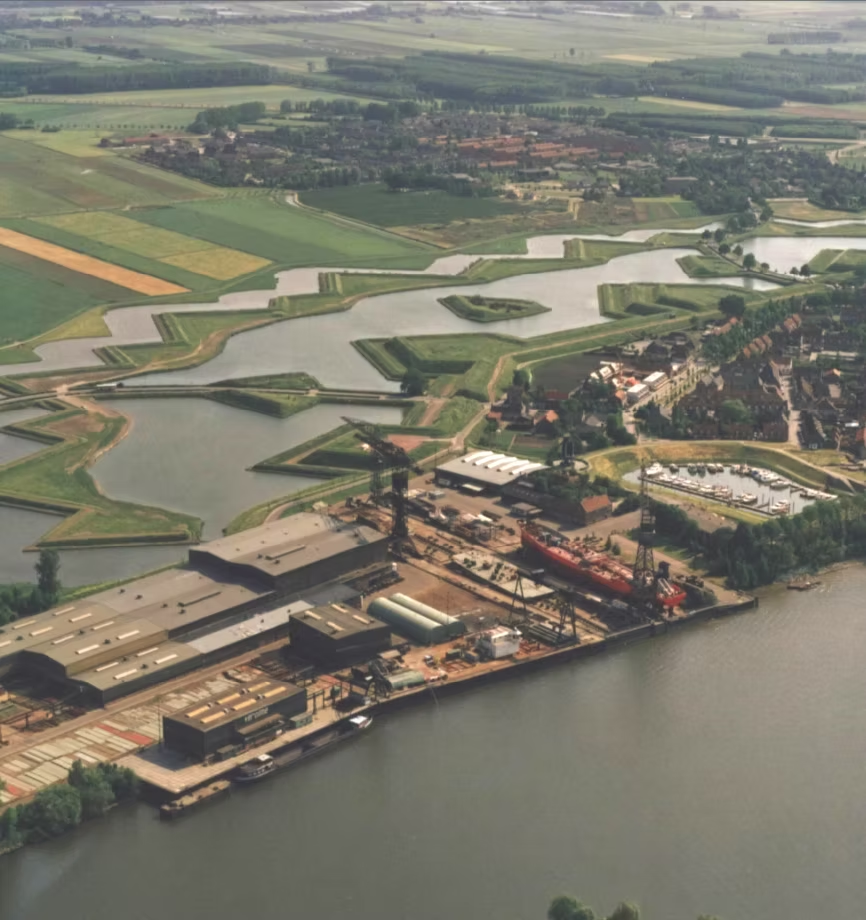
03Maritime & Logistics
Relationship-driven markets where technical credibility, operational pressure, international networks and long buying cycles shape the commercial process.
04Software & Technology
Propositions that need a clear use case, the right buying group and a strong translation from technical capability to commercial relevance.
05Professional & Business Services
Trust-led sales environments where expertise is the product and the quality of the first conversation strongly influences what happens next.

The operating model can be repeatable. The market approach cannot.
Research, business development, CRM and handover need structure. But the way you prioritise accounts, understand buying groups and create relevance has to reflect the market in front of you.
Explore our commercial operating model →Four questions we answer before scaling commercial activity.
Instead of starting with volume, we first understand what makes an account relevant, who influences the decision and what should be remembered after every interaction.
Which account clusters actually matter?
Segments that look similar from the outside can behave very differently once applications, geography, regulation, size or technical fit are taken into account.
Who shapes the decision beyond the obvious contact?
Technical, operational, procurement and management stakeholders often value completely different aspects of the same proposition.
Why could a conversation matter now?
Projects, capacity, regulation, strategic change and investment can all create a reason to engage. Relevance improves when those signals are visible.
What should the organisation learn from each interaction?
Objections, timing, stakeholders and market signals should improve the next conversation rather than disappear into personal inboxes.
Maritime & Logistics
Technical credibility, operational reality and long-term relationships come together in a market where timing and context can matter as much as the proposition itself.